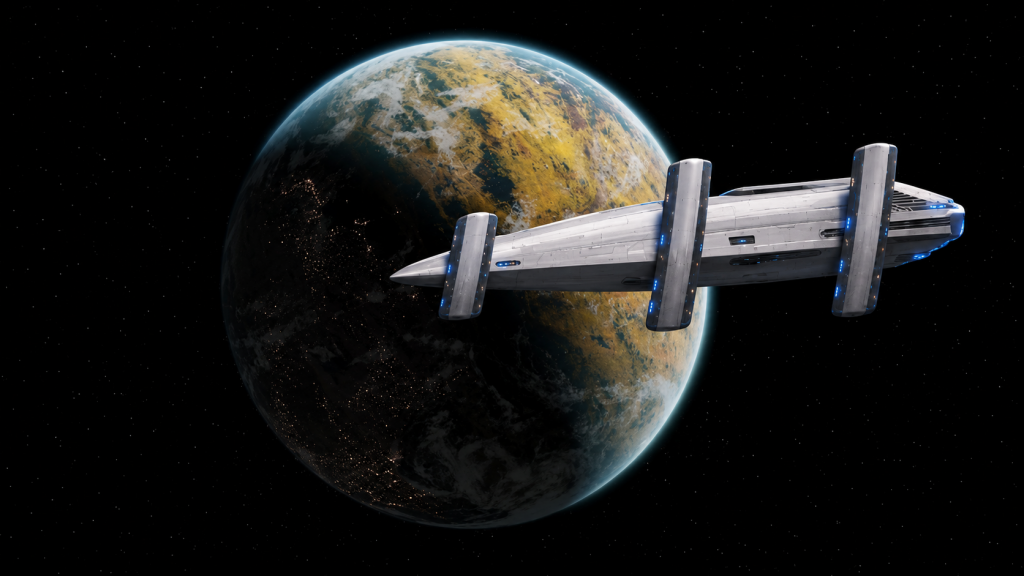
This document provides the financial framework supporting the Starship Adventures business concept. While the Investor Prospectus focuses on the market opportunity, customer demand, competitive advantages, and long-term vision of the enterprise, this document examines the economic feasibility of developing and operating a Starship Adventures enterprise.
The purpose of this volume is to provide potential investors, lenders, strategic partners, and financial analysts with a structured evaluation of the capital requirements, operating assumptions, revenue drivers, and potential investment outcomes associated with the project.
Topics addressed include:
- Capital development requirements
- Sources and uses of funds
- Construction and infrastructure costs
- Starship fabrication and technology investments
- Staffing and operating expense models
- Guest capacity and utilization assumptions
- Revenue and pricing scenarios
- Multi-year financial projections
- Sensitivity and risk analysis
- Return-on-investment scenarios
- Enterprise valuation models
- Expansion and scalability economics
Unlike the Investor Prospectus, which presents the strategic vision of Starship Adventures, this volume focuses on the financial mechanics required to transform that vision into a sustainable and profitable business.
The financial analyses presented herein are based upon current assumptions regarding facility design, operational capacity, market positioning, guest demand, staffing requirements, and construction costs. As additional engineering studies, market research, operational testing, and business planning activities are completed, the assumptions and projections contained within this document may be refined.
This volume should be considered a living financial model intended to support investment evaluation, capital planning, lender review, and strategic decision-making throughout the development and expansion of the Starship Adventures enterprise.
Estimated Initial Capital Requirements
Preliminary conceptual estimate requires professional architectural and construction validation.
Starship Simulator Capital
The first full-scale Scout Class simulator is expected to require approximately $175M–$225M in direct ship-specific capital, including the six-deck simulator structure, hull support system, motion platform, internal fit-out, show systems, software, safety systems, and commissioning. Later ships are expected to cost materially less on a per-unit basis because the core software platform, mission engine, SCOUT architecture, design engineering, and operational infrastructure will already have been developed. The first ship’s development includes:
- the six-deck internal starship environment;
- themed hull shell;
- structural support frame;
- ship-access catwalks and service infrastructure;
- motion/simulation platform;
- internal cabins, heads, bridge, engineering, galley, medical, EOC, corridors, airlocks;
- show control, lighting, sound, displays, effects, sensors, cameras;
- shipboard software, SCOUT, mission engine, console interfaces, and integration;
- commissioning, testing, spares, and contingency.
| Build Standard | Estimated Cost |
| Minimum credible full-scale simulator | $140M–$170M |
| Recommended investor planning case | $175M–$225M |
| High-spec / whole-hull motion / premium show systems | $225M–$300M |
Cost breakdown
| Category | Planning Range |
| Design, architecture, engineering, code compliance | $6M–$10M |
| Primary structural steel, deck stack, hull support frame | $22M–$35M |
| Exterior hull shell, visible hull skin, pylon/ring scenic elements | $10M–$18M |
| Motion/simulation platform, jacks, actuators, vibration, safety locks | $25M–$45M |
| Ship service infrastructure, catwalks, access ways, hidden staff routes | $10M–$18M |
| Interior construction and themed fit-out | $30M–$50M |
| Cabins, heads, galley, medical bay, furnishings, fixtures | $12M–$22M |
| Electrical, HVAC, plumbing, fire/life safety, air handling, utilities | $18M–$30M |
| Displays, projection, bridge viewscreen, console screens, AV systems | $18M–$35M |
| Lighting, sound, vibration, atmospheric effects, scent, environmental effects | $10M–$20M |
| IT infrastructure, network, cameras, access control, tracking, servers | $8M–$15M |
| Software: mission engine, SCOUT, consoles, persistent universe, show control | $15M–$30M |
| Testing, commissioning, safety validation, spare parts | $6M–$12M |
| Contingency / escalation / integration risk | $25M–$45M |
The simulator is not just a themed interior. The campus document describes each ship as an independent, enclosed, sound-isolated, motion-capable simulator with a habitable hull, six stacked decks, a motion platform, and a 10–15-meter hidden service zone around each vessel for HVAC, electrical, safety, emergency access, and mission-control visibility.
The Scout Class specification also describes a very large and complex asset: roughly 160 meters long, six decks, private accommodations, bridge, engineering spaces, sanitation compartments, medical bay, EOC/science spaces, life-support simulation, SCOUT interfaces, sensor systems, communications, damage control, power systems, and other functional ship environments.
The biggest cost drivers are likely to be:
- The motion/simulation platform
A 160-meter-long, six-deck simulator sitting on a platform capable of subtle pitch, roll, vibration, impulse effects, and safety lockout is a major engineered structure. Even limited motion will be expensive. - The internal fit-out
This is closer to building a boutique hotel, theatrical environment, control-room simulator, escape-room complex, and cruise-ship interior at the same time. - The display, audio, and show-control systems
The bridge viewscreen, departmental displays, environmental audio, lighting, vibration, emergency effects, and mission-state-linked automation are not cosmetic. They are core product systems. - Software and SCOUT
The first ship carries the burden of developing the mission engine, SCOUT AI layer, console software, persistent universe database, guest progression system, show-control integration, safety overrides, and Mission Control tools. Volume 6 already notes that the first ship bears most of the software, engineering, infrastructure, and mission-systems development burden, while later ships benefit from shared systems.
A Six Starship Model
This assumes the first starship has already absorbed the most expensive first-article costs: core engineering, base software architecture, SCOUT design, mission engine, console framework, construction methodology, safety model, and initial vendor qualification.
The cost of ships 2–6 is lower than the first ship on a per-unit basis because the core engineering, software architecture, SCOUT platform, mission engine, console designs, construction methodology, and operating procedures have already been developed. However, each additional vessel remains a large independent simulator requiring its own six-deck structure, hull shell, motion platform, shipboard systems, interiors, safety systems, displays, audio, lighting, environmental effects, network infrastructure, and commissioning.
For investment purposes the bottom-line planning number is: $850M for the additional five starships.
That is a clean midpoint and much more defensible than $75M–$125M. It makes the six-ship campus expensive, but it also avoids undermining credibility for those who will immediately recognize that five 160-meter, six-deck, motion-capable immersive simulators cannot be built for $15M–$25M each.
Summary cost breakdown with additional five ships
| Cost Category | Estimate |
| Repeat engineering, construction administration, permitting support | $20M–$35M |
| Structural frame, six-deck stack, hull support structure | $100M–$150M |
| Motion platforms, actuators, vibration systems, safety lockouts | $125M–$175M |
| Exterior hull shell, scenic hull skin, pylons/rings, access panels | $55M–$85M |
| Ship-adjacent service infrastructure, catwalks, hidden access, egress | $50M–$85M |
| Internal themed construction: corridors, bridge, engineering, EOC, commons, airlocks | $135M–$200M |
| Cabins, heads, showers, galley, medical bay, fixtures, furnishings | $50M–$80M |
| Shipboard MEP: HVAC, plumbing, electrical, fire/life safety, utility tie-ins | $90M–$135M |
| Displays, bridge viewscreens, console screens, projection, AV hardware | $90M–$145M |
| Lighting, distributed audio, vibration, atmospheric effects, scent, show control | $45M–$80M |
| Shipboard IT, network, cameras, access control, guest tracking, local servers | $35M–$60M |
| SCOUT Software Development | $8M–$10M |
| Testing, commissioning, spares, acceptance trials | $40M–$70M |
| Contingency / escalation / integration risk | $90M–$145M |
Total recommended range: ≈ $723M–$895M
Why the cost is still high even after the first ship
The additional ships benefit from shared systems, but they are not cheap copies. The physical asset is still massive. Each one needs its own motion-capable deck stack, hull enclosure, HVAC, electrical systems, fire/life safety, bridge, consoles, displays, cabins, heads, galley, medical bay, science area, engineering spaces, guest tracking, cameras, hidden staff access, and safety override systems.
The financial model correctly notes that additional vessels can leverage shared warehouse infrastructure, utilities, mission control systems, administrative staffing, software infrastructure, culinary operations, maintenance teams, logistics, and training systems. It also correctly states that the first ship bears the majority of facility, engineering, software architecture, infrastructure, and mission-systems development costs.
However, the later ships still require full physical construction. The savings are mainly in:
| Area | Savings on Ships 2–6 |
| Concept design | Major savings |
| Core SCOUT architecture | Major savings |
| Mission engine | Major savings |
| Console software framework | Major savings |
| Engineering design | Moderate to major savings |
| Vendor learning curve | Moderate savings |
| Bulk procurement | Moderate savings |
| Physical interiors | Limited savings |
| Motion platform | Limited savings |
| Structural steel/deck stack | Limited savings |
| Displays and AV | Limited savings |
| Fire/life safety | Limited savings |
| HVAC/plumbing/electrical | Limited savings |
$750M–$950M for the additional five starships
That equals roughly: $150M–$190M per additional starship
Starship Campus Construction Capital
Starship Adventures Campus is a destination-based immersive entertainment facility designed to receive, train, process, launch, recover, and support guest crews participating in multi-day Scout Class starship missions. The campus is not merely a themed hotel or attraction; it is the operational groundside equivalent of a spaceport, training center, mission-control facility, hospitality venue, simulator-support complex, and production/backstage infrastructure hub.
Core campus elements are:
| Campus Element | Purpose |
| Arrival / Check-In Facility | Guest intake, waivers, uniforms, role assignment, orientation |
| Crew Training Center | Mission indoctrination, ship systems training, emergency drills, role-based training |
| Briefing / Mission Operations Area | Story setup, command briefings, mission objectives, final crew prep |
| Dining / Pre-Launch Hospitality | Dinner before transfer, restrooms, guest staging |
| Spaceplane / Transfer Simulation Facility | Simulated departure from Earth and transfer to orbit |
| Orbital Transfer Sleeve | Replacement for the larger Orbital Terminal; simple docked transfer tunnel scenario |
| Starship Simulator Building | Large-span warehouse containing one or more full-scale Scout Class starship simulators |
| Hull Support / Motion Platform Infrastructure | Structural supports, gimbals, vibration systems, access gantries, service catwalks |
| Backstage Operations | Staff access, maintenance, control rooms, reset areas, concealed guest-support routes |
| Central Mission Control | Simulation control, safety monitoring, guest tracking, live scenario management |
| Engineering / Maintenance Shops | Repair, set dressing, mechanical systems, electronics, simulator upkeep |
| Wardrobe / Props / Consumables | Uniforms, role materials, mission objects, food and cabin reset supplies |
| Emergency / Safety Facilities | First aid, fire/life-safety control, evacuation routes, security |
| Administration | Corporate offices, HR, finance, sales, group bookings, investor/partner hosting |
Estimates do not include the actual six starship simulators, their interiors, ship-specific platforms, or ship-specific show systems previously estimated separately.
Campus Construction Costs
| Scenario | Estimate |
| Lean campus / aggressive cost control | $750M–$825M |
| Recommended planning case | $850M–$950M |
| Higher-spec flagship campus | $950M–$1.05B |
Summary cost breakdown
| Campus Component | Estimated Cost | |
| Architecture, engineering, permitting, project management | ||
| Land Acquisition | ||
| Land development, grading, utilities, roads, parking, security perimeter | ||
| Starship Simulator Building | ||
| Central plant, HVAC, electrical service, plumbing, fire/life safety | ||
| Fleet-bay shared infrastructure, service corridors, catwalks, loading docks | ||
| Mission Control complex / Mission Operations Center | ||
| Crew Training Center / Indoctrination Center | ||
| Terrestrial Transport Terminal | ||
| Crew Transport Vehicle bay, CTV simulator, launch/docking effects | ||
| Orbital Transfer Sleeve system and transfer corridors | ||
| Hospitality Center, guest arrival center, crew lounge, dining | ||
| Central commissary / production kitchen | ||
| Administration center and business offices / support spaces | ||
| Staff support center, employee dining, training, limited housing support | ||
| Maintenance, fabrication, prop shop, storage, technical workshops | ||
| Campus-wide IT, data center, network backbone, cybersecurity, cameras, access control | ||
| Campus theming, wayfinding, non-ship FF&E, guest-facing environmental design | ||
| Construction contingency, escalation, commissioning reserve | ||
What is Excluded
This estimate excludes the actual starship simulator construction costs previously discussed:
| Excluded Item | Reason |
| First Scout Class starship simulator | Previously estimated separately |
| Additional five starship simulators | Previously estimated separately |
| Ship interiors, cabins, bridge, engineering, EOC, galley, heads | Starship-specific capital |
| Ship motion platforms | Included in starship simulator cost |
| Ship hull support frames | Included in starship simulator cost |
| Ship-specific screens, consoles, lighting, audio, atmospheric effects | Included in starship simulator cost |
| Ship-specific SCOUT integration and mission console software | Included in starship simulator cost |
| Pre-opening payroll, marketing launch, and working capital | Startup capital, not construction |
Shared technology capital
Real estate acquisition
The initial six-starship flagship campus is expected to require approximately 90–120 acres, including the main 400 m × 300 m high-bay simulator facility, Mission Control, training and hospitality areas, parking, utility infrastructure, service yards, emergency access, security buffers, and limited expansion capacity. The main building footprint itself occupies approximately 30 acres.
No less than 150 acres is required for a future second fleet hall, additional ship classes, hotel, museum, retail, or convention/event space.
Finding 150 acres of desert land with active utilities at a low price is a challenging combination. Undeveloped desert acreage with power and water is typically found in established, buyer-friendly rural counties in Arizona and New Mexico. While “low price” varies by scale, to keep costs manageable. An alternative is to target regions where acquiring the raw land and bringing utilities to the property or find properties near the edge of existing towns where power poles already run along the boundary can viable.
Best Areas to Target
- New Mexico (Luna or Socorro Counties): New Mexico is known for some of the most affordable acreage in the country, where raw land in areas like Deming can be quite inexpensive. Buying large acreage here will often require off-grid utility solutions, but land near the town grid is significantly more affordable than in neighboring states.
- Arizona (Mohave or Cochise Counties): These counties offer vast expanses of flat desert valley with lenient zoning laws. Large contiguous parcels (like 40 to 160 acres) can be assembled here at lower costs than near major metros, though there may be a need to invest in solar or a private well, or purchase at the edges of small utility service areas.
- Texas (Hudspeth or Culberson Counties): Far West Texas has abundant, cheap desert acreage. Utilities usually require private installation (solar, septic) but parcels large enough for a 150-acre ranch are widely available at accessible entry points.
Pre-opening startup capital
Operating reserve
Expansion capital
Capital Summary
Revenue
Primary Revenue Sources
Voyage Tickets
Multi-day immersive mission experiences.
Pricing Strategy
The project is positioned closer to:
- Expedition adventure travel
- Destination immersive experiences
- Simulation tourism
- Boutique experiential travel
- Multi-day interactive entertainment
rather than:
- Traditional theme parks
- Luxury resorts
- Mass-market attractions
| Experience Tier Guests Estimated Price Extended Revenue Standard Cabin 13 $10,000 $130,000 Captain’s Suite 1 $15,000 15,000 Full Ship Buyout 14 $25,000 $145,000 Pricing depends on: Mission duration Scenario complexity Cabin type Group bookings Seasonal demand Special campaigns |
Additional Revenue Sources
| Revenue Source | Estimated Annual Revenue |
| Merchandise | $8M |
| Media & Licensing | $4M |
| Special Events & Conventions | $5M |
| Total Ancillary Revenue | ≈ $17M |
Six Ship Revenue Model
One of the strongest long-term economic advantages of the Starship Adventure concept is the ability to scale multiple vessels within a single integrated facility while sharing major infrastructure, technology systems, and administrative overhead.
Unlike cruise ships or hotels that require fully duplicated infrastructure for expansion, additional Starship Adventure vessels can leverage:
- Shared warehouse infrastructure
- Shared utilities and environmental systems
- Shared mission control systems
- Shared administrative staffing
- Shared security operations
- Shared software infrastructure
- Shared culinary operations
- Shared maintenance teams
- Shared marketing operations
- Shared logistics and storage
- Shared training systems
- Shared emergency operations
Each ship operates simultaneously with:
- Different crews
- Different mission timelines
- Different story arcs
- Different command structures
- Different operational events
- Different guest dynamics
This creates the sensation of a larger living universe while dramatically improving operating efficiency.
Operational Scaling Philosophy
The first ship bears the majority of:
- Facility costs
- Engineering costs
- Software architecture costs
- Infrastructure costs
- Mission systems development
- Environmental systems
- Administrative staffing
Additional ships primarily add:
- Scenic fabrication
- Additional actors
- Additional guest operations
- Expanded mission content
- Incremental maintenance
This creates substantial economies of scale.
Assumptions
| Metric | Value |
| Total Ships | 6 |
| Guests per Ship | 14 |
| Total Concurrent Guests | 84 |
| Voyages per Week per Ship | 2 |
| Operational Weeks per Year | 48 |
| Average Ticket Price | $10,000 |
| Average Occupancy | 90% |
Annual Voyage Capacity
- Per Voyage Cycle
84 guests × $10,000 average spend = $840,000 revenue per simultaneous voyage cycle
- Weekly Revenue
2 voyage cycles per week: $840,000 × 2 = $1.68M weekly voyage revenue
- Annual Voyage Revenue
$1.68M × 48 operational weeks = ≈ $80.64 Million Annual Voyage Revenue
Shared Infrastructure Cost Advantages
Economies of Scale – A six-ship facility does not require the staffing or infrastructure six times.
Major efficiencies with 6 ships include:
| Shared Mission Control | One centralized mission operations center can coordinate all six vessels simultaneously. |
| Shared Culinary Operations | One integrated galley and food logistics operation can support multiple ships. |
| Shared Technical Operations | Engineering, networking, software, and environmental systems scale efficiently across multiple vessels. |
| Shared Administration | Finance, HR, marketing, reservations, legal, and executive management remain largely centralized. |
| Shared Maintenance Infrastructure | Scenic fabrication, repairs, inventory management, and technical workshops serve all ships simultaneously. |
Annual Revenue
Single Ship Revenue Model
Assumptions:
- 14 guests average occupancy
- Average spend per guest: $10,000
- 1 Mission every 5 days = 73 Missions
- 52 operational weeks annually
14 Guest × $10,000/Guest × 73 missions = $10.22M annual voyage revenue
| Revenue Type | Annual Revenue |
| Voyage Revenue | $10.22M |
| Ancillary Revenue | $1.00M |
| Total Revenue | ≈ $11.22M |
Six Ship Revenue Model
| Revenue Type | Annual Revenue |
| Voyage Revenue ($10.22M X 6 Ships) | $61.32m |
| Ancillary Revenue | $17.00M |
| Total Revenue | ≈ $78.32M |
Expenses
Staffing
Starship Staff
Assuming 6 Starships operating 50 weeks per year.
| Position | Per Shift | Annual Cost (k) | Staff per 24 Hours | 6 Starships Extended Cost |
| Mission Coordinator | 1 per ship | $180K | 3 | $3.20M |
| Ship Steward | 1 per ship | $140K | 1 | $.84M |
| Ship Chef | 1 per ship | $140K | 1 | $.84M |
| Total | $760.0K | $5.18M |
Regular Staff
| Position | Staff Count | Annual Cost / Staff | Extended Cost |
| Mission Director | 1 | $300K | $.3M |
| Receptionists/Assistants | 3 | $180K | $0.54M |
| Hospitality | 10 | $100K | $1.0M |
| Food Service | 8 | $70K | $.56M |
| Safety Officer | 1 | $120K | $0.12M |
| IT | 6 | $120K | $0.72M |
| Mission Designers | 3 | $330K | $0.99M |
| Security | 6 | $100K | $.6M |
| Mission Control Facilities Manager | 1 | $120K | $0.12M |
| Facilities / Maintenance | 10 | $100K | $1.0M |
| Controller | 1 | $160K | $0.16M |
| Purchasing | 2 | $120K | $0.24M |
| Finance Staff | 4 | $120K | $.48M |
| Custodial | 10 | $250K | $.75M |
| Marketing | 3 | $300K | $0.9M |
| Total | 58 | $2.07M | $7.87M |
Total Annual Staff
| Starship Staff | $5.18M |
| Regular Staff | $7.87M |
| Total | $13.05M |
Operating Expenses
| Category | Estimated Cost | ||
| Staffing[1] | $13.5M | ||
| Facility Operations | $18M | ||
| Technical Infrastructure | $8M | ||
| Guest Operations | $12M | ||
| Maintenance & Scenic Replacement | $8M | ||
| Marketing & Sales | $6M | ||
| Insurance & Compliance | $5M | ||
| Total Operating Expenses | ≈ $70.5M | ||
Expense Summary
Financial Projections
EBITDA
Annual EBITDA
Annual EBITDA = Annual Revenue – Annual Operating Expenses
$78.32M – $70.5M = $7.82
EBITDA Margin – Six Ship Model
EBITDA Margin = Annual EBITDA + Annual Revenue
$306.1 ÷ $376.6M = 81.2%
That is extremely strong for experiential entertainment and hospitality.
For comparison:
- Theme parks often operate 20–30%
- Boutique hospitality often 15–25%
- Cruise operators often 15–25%
- Premium entertainment concepts can exceed 30%
The model becomes highly efficient once infrastructure is shared across multiple ships.
ROI Analysis
EBITDA Yield (Simple ROI)
Formula: EBITDA ÷ Initial Investment
Six Ship Model
- $306.1M ÷ $500M ≈ 61%
- Annual EBITDA Yield ≈ 61%
That is exceptionally attractive for a destination experiential asset.
Estimated Payback Period
Formula: Investment ÷ EBITDA
Six Ship Model
- $500M ÷ $306.1M ≈ 6.4 years
- Estimated Payback Period ≈ 1.6 Years
That becomes highly compelling for:
- private equity,
- experiential hospitality investors,
- entertainment infrastructure funds,
- destination tourism developers,
- and strategic media partners.
Potential Enterprise Valuation
Experiential entertainment businesses commonly trade at:
8×–15× EBITDA.
Six Ship Model
| Multiple | Estimated Valuation |
| 8× | $301M |
| 10× | $376M |
| 12× | $452M |
| 15× | $565M |
Likely Enterprise Valuation Range: ≈ $375M–$550M if operational execution is successful.
Development Roadmap
| Phase 1 — Prototype & Validation | Operational demo environmentInvestor demonstrationsConvention showcasesMission software frameworkConcept renders Prototype bridge simulator Brand development |
| Phase 2 — Engineering & Facility Acquisition | Facility acquisition Structural engineering Simulation infrastructure planningTechnology architecture |
| Phase 3 — Construction | Hull fabrication Deck constructionSystems installationEnvironmental integration Hidden operational infrastructure |
| Phase 4 — Technology Integration | Mission Systems AI systems Console integrationEnvironmental automationAudio and lighting systems |
| Phase 5 — Staffing & Training | Performer trainingMission operations developmentTechnical operations trainingEmergency proceduresGuest immersion protocols |
| Phase 6 – Closed Beta Voyages | Invite-only operationsOperational stress testingMission balancingGuest feedback analysis |
| Phase 7 – Public Launch | Full operationsMembership programsConvention partnershipsCorporate voyage sales |
Investment Opportunities
A single six-ship campus can be a profitable business. Multiple campuses can become a major entertainment brand. The key is understanding what scales well and what does not.
Phase 1-Establish the Flagship Campus
The first facility should be viewed as a proof-of-concept rather than the final business.
Objectives
- Validate guest demand
- Validate pricing
- Build operating procedures
- Build mission content library
- Build brand recognition
- Build guest community
- Demonstrate profitability
The first campus would likely include:
- 6 Scout Class Starships
- Mission Control
- Training Center
- Hospitality Infrastructure
- Commissary
- Administration
- Maintenance Facilities
Capacity:
- 84 guests per mission cycle
- Approximately 25,000 guests annually (84 Guests/Mission X 6 ships X 50 weeks)
- The first campus becomes the equivalent of a flagship resort.
Phase 2-Expand the Fleet at the Same Campus
Before building another location, it may make more sense to expand the fleet. Mission Control and the support infrastructure are shared assets. Adding additional ships is relatively inexpensive compared to building a second campus.
For example, the original Campus has six starships. An expanded Campus could double that with 12 starships. The benefits include:
- Shared administration
- Shared maintenance
- Shared hospitality
- Shared IT infrastructure
- Shared mission development
- This improves operating margins.
Phase 3-Multiple Ship Classes
This is where the business becomes much more compelling. Today guests board a Scout Class vessel. Tomorrow they may choose among several ship types. The Scout Class is designed for 16 guests, and the missions are primarily exploration, discovery, and science
A Ranger Class could house 12 Guests for long-range reconnaissance, special operations, or covert missions.
A Colonial Transport could support 40–60 guests for civilian colony simulation, political intrigue, economic management, or family-oriented missions
A Diplomatic Cruiser might house 20–30 Guests for first contact, negotiations, political campaigns, or interstellar conferences
Finally, a Fleet Carrier could hold 50–100 Guests to conduct large-scale campaigns, multi-ship operations, command-level experiences.
This immediately increases repeat visitation. Guests can experience entirely different careers.
Phase 4-Campaign Continuity
This may become your most valuable asset. Imagine a persistent universe where:
Mission 1- Crew discovers alien ruins.
Mission 8-Another crew studies them.
Mission 30-An alien civilization emerges.
Mission 75-Diplomatic conflict develops.
Mission 150-Interstellar war threatens.
Guests begin influencing a shared history. This creates something closer to massive multiplayer gaming, tabletop campaigns, and living-world storytelling than tourism. The content becomes almost infinite.
Phase 5-Membership Program
This may ultimately generate more predictable revenue than mission sales.
Cadet Membership
- Priority booking
- Mission newsletters
- Access to mission archives
Officer Membership
- Early mission selection
- Rank progression
- Campaign participation
Captain Membership
- Exclusive missions
- Command-track training
- Private events
- Priority charter access
Recurring subscription revenue is highly attractive to investors.
Phase 6-Corporate Market
This is often overlooked. The facility naturally supports:
Executive Leadership Training
- Crisis management
- Decision making
- Team building
Corporate Retreats
- Technology companies
- Aerospace companies
- Defense contractors
University Programs
- STEM education
- Leadership programs
- Space science programs
Corporate pricing is frequently higher than consumer pricing.
Phase 7-International Expansion
Once the model is proven, multiple campuses become possible. Potential locations:
United States
- Southern California
- Texas
- Florida
Europe
- United Kingdom
- Germany
Asia
- Japan
- Singapore
Middle East
- UAE
The crucial point is that the missions can remain globally connected. A crew in Texas could discover something that affects a mission in Japan.
Phase 8-Destination Resort Development
Eventually the campus itself becomes a destination. Guests may spend several days before and after missions. Potential additions:
| Orbital Terminal Hotel | A themed hotel adjacent to Mission Control. |
| Starship Academy | Training experiences. |
| Starship Museum | History of the fictional universe. |
| Simulation Center | Short-duration experiences. |
| Restaurants and Retail | Branded merchandise. |
Phase 9-Media Expansion
Most investors immediately think: “Can this become a franchise?” Possibly. The persistent universe naturally supports:
- Novels
- Streaming content
- Podcasts
- Documentary-style mission recaps
- Training videos
- Interactive fiction
The missions themselves become content.
The Most Likely Long-Term Outcome
The strongest growth path may not be building dozens of campuses. It may be creating a network of 3–5 flagship campuses worldwide with a continuously evolving shared universe. Think about the progression:
| Stage | Revenue Driver |
| Startup | Mission bookings |
| Growth | Fleet expansion |
| Maturity | Memberships |
| Scale | Multiple campuses |
| Enterprise | Intellectual property ecosystem |
That final stage is where valuations increase dramatically. Investors often pay modest multiples for hospitality businesses. They pay much larger multiples for businesses that combine:
- Hospitality
- Experiences
- Community
- Subscription revenue
- Intellectual property
Starship Adventures has the potential to contain all five. The strongest version of the company is not a place people visit once. It is a universe people belong to for years.
Risk Mitigation Analysis
Key Risks
High Capital Requirements
Mitigation:
- Phased development
- Strategic investors
- Prototype validation
- Community engagement
- Sponsorships
- Partnership financing
Operational Complexity
Mitigation:
- Simulation automation
- Standardized mission frameworks
- Experienced operational leadership
- Incremental rollout
Demand Validation
Mitigation:
- Prototype experiences
- Convention demonstrations
- Pilot programs
- Community pre-sales
- Beta voyage programs
- Influencer campaigns
Conclusion
Starship Adventure represents a unique convergence of:
- Immersive entertainment
- Operational simulation
- Science fiction fandom
- Interactive storytelling
- Destination experiential tourism
- Collaborative adventure gaming
The project intentionally moves away from traditional luxury hospitality models and instead focuses on creating the most believable operational starship environment ever constructed for public participation.
Guests are not spectators. They are crew.
The emotional power of the experience comes from:
- teamwork,
- mission pressure,
- discovery,
- exploration,
- problem solving,
- operational realism,
- and temporary psychological transportation into another world.
By emphasizing immersion, authenticity, and participatory adventure over visible luxury, Starship Adventure establishes a stronger and more defensible market identity.
The result is not simply a themed attraction. It is a new category of experiential entertainment.
- A living starship.
- A collaborative science fiction adventure.
- A destination experience unlike anything currently available in the world.
This document described the Market Opportunity, a Competitive Analysis, a Revenue Model, Financial Projections, a Development Roadmap, Investment Opportunities, and a Risk Mitigation analysis.
The next companion document, Volume 1-Guest Crew Experience describes the Guest Crew Experience and explains the customer attraction to the Starship Adventures concept.